
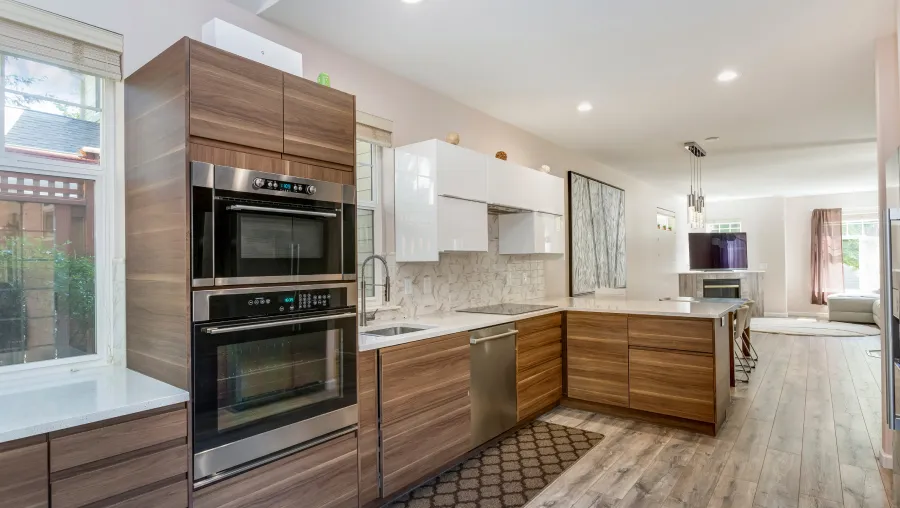
What does a kitchen remodel actually cost in Evansville today?
Planning a kitchen renovation starts with understanding the three main budget tiers available to homeowners in southern Indiana. A basic refresh typically runs between $15,000 and $30,000, covering essentials like cabinet refacing, laminate countertops, vinyl flooring, and updated lighting fixtures. This tier works well for homeowners looking to modernize an outdated kitchen without major layout changes or structural modifications.
Mid-range renovations fall between $30,000 and $65,000 and often include full cabinet replacement, granite or quartz countertops, quality tile or hardwood flooring, and upgraded appliances. This budget level allows for some minor layout adjustments and improved functionality, such as adding an island or reconfiguring the work triangle. Most Evansville homeowners pursuing a mid-range renovation find this sweet spot balances quality materials with reasonable investment.
High-end kitchen transformations start at $65,000 and can exceed $100,000 depending on size and finishes. These projects feature custom cabinetry, premium stone countertops, professional-grade appliances, designer tile work, and often involve structural changes like removing walls or expanding the footprint. Permits and inspections add to the total, with Vanderburgh County requiring documentation for electrical, plumbing, and structural modifications. Labor typically accounts for 40 to 50 percent of your total budget across all tiers, with material costs making up the remainder. Understanding these budget ranges helps you set realistic expectations and make informed decisions about where to allocate resources for maximum impact in your space.
How long does a typical kitchen renovation take from start to finish?
Kitchen projects in the Evansville area typically take six to twelve weeks from demolition to final walkthrough, though timelines vary based on scope and material availability. Basic refreshes with cabinet refacing and countertop replacement often finish in four to six weeks, while full renovations with custom cabinetry and structural changes extend to three months or longer. One factor many local homeowners underestimate is lead time for custom elements. Cabinet orders can take six to eight weeks for delivery alone, especially during peak building season from March through October when demand surges across southern Indiana.
Seasonal considerations affect scheduling in this region. Winter months offer more flexible contractor availability, though holiday periods from Thanksgiving through New Year slow permit processing and material deliveries. Spring and early summer represent the busiest renovation season, when families aim to complete projects before school starts in August. Planning ahead by three to four months ensures better contractor selection and avoids the rush.
Local permitting through Vanderburgh County Building Commission typically takes one to two weeks for approval, though complex projects involving structural changes may require additional review time. Inspections occur at multiple stages including rough-in for electrical and plumbing, followed by final inspection before occupancy. Most contractors schedule these proactively, but unexpected issues like outdated wiring in older Evansville homes built before 1980 can add days or weeks to the timeline. Setting aside a 15 to 20 percent time buffer accounts for these realities and reduces stress during the renovation process. Successful projects balance ambition with practical scheduling that respects both the homeowner’s needs and the construction realities of working in existing homes.
Which materials deliver the best value for your investment?
Material choices represent the single biggest opportunity to control costs while maintaining quality in your kitchen transformation. Cabinet decisions alone account for 30 to 40 percent of most budgets. Cabinet refacing costs roughly one-third to one-half the price of full replacement, ranging from $4,000 to $9,000 for an average-sized kitchen compared to $12,000 to $25,000 for new semi-custom units. Refacing works beautifully when cabinet boxes remain structurally sound but doors and drawer fronts show age. Full replacement makes sense when you need to change the layout, add storage, or when existing cabinets have water damage or structural issues common in older homes.
Countertop selections span a wide price spectrum. Laminate remains the most budget-friendly option at $25 to $50 per square foot installed, offering modern patterns that mimic stone at a fraction of the cost. Granite countertops run $50 to $100 per square foot and provide durability with natural beauty, while quartz falls in a similar range with less maintenance. Tile countertops offer a middle ground at $30 to $70 per square foot, though grout lines require ongoing attention. For families with active kitchens who prioritize durability over luxury finishes, granite or quartz delivers decades of service that justifies the upfront investment.
Flooring decisions affect both budget and daily comfort. Vinyl plank flooring has improved dramatically in quality and realism, costing $3 to $7 per square foot installed while resisting moisture better than many alternatives. Ceramic or porcelain tile installation ranges from $8 to $15 per square foot and handles spills exceptionally well, a practical choice given southern Indiana’s humid summers. Hardwood flooring starts at $10 per square foot and adds warmth and resale value, though it requires more maintenance in high-moisture areas. Thoughtful material selection based on how you actually use your kitchen, rather than trends alone, ensures satisfaction long after installation crews finish their work.
What unexpected costs catch homeowners off guard during renovation?
Beyond materials and labor, several hidden expenses affect final project costs. Permit fees in Vanderburgh County typically run $200 to $600 depending on scope, with electrical and plumbing permits required for any work beyond cosmetic updates. Inspections add time but rarely add direct costs, though failed inspections requiring rework certainly impact budgets. Many Evansville homes built in the 1950s through 1970s hide outdated electrical panels, aluminum wiring, or cast iron plumbing that must be updated to meet current code when walls open during renovation. These surprises can add $2,000 to $8,000 to initial estimates.
Temporary kitchen setups during construction represent another overlooked expense. Most families set up a makeshift cooking area in another room with a microwave, toaster oven, and portable cooktop, costing $150 to $400 if you don’t already own these items. Eating out more frequently during the six to twelve week construction period adds up quickly, with many homeowners spending an additional $800 to $1,500 on restaurants and takeout. Factoring these lifestyle adjustments into your overall budget prevents financial stress midway through the project.
Structural discoveries often surface once demolition begins. Water damage around sinks or dishwashers, subflooring that needs replacement, or outdated framing that doesn’t meet current load requirements all add costs. Setting aside a 10 to 15 percent contingency fund addresses these issues without derailing the entire project. Professional kitchen design services help identify potential problems during the planning phase through careful assessment of existing conditions. Detailed planning reduces surprises, and experienced contractors anticipate common issues in homes of different eras. Working with professionals who understand local building stock and code requirements transforms hidden costs from budget-busting shocks into manageable, planned expenses that keep your project on track financially.
Why does partnering with experienced professionals matter for your investment?
Hartweck Construction & Design, Inc. brings decades of experience transforming kitchens throughout the Evansville area, understanding both the technical challenges of older home renovation and the design preferences of southern Indiana families. From custom kitchen cabinet construction to complete layout reconfigurations, the team handles every aspect of your project with attention to detail and respect for your home. Local knowledge matters when navigating Vanderburgh County permitting, selecting materials that perform well in humid summer conditions, and scheduling work around the busy spring and fall seasons when demand peaks. Many Evansville homeowners discover that kitchens in homes built before 1980 require electrical panel upgrades or plumbing modifications to support modern appliances, challenges the team anticipates and addresses proactively during planning.
Professional design prevents costly mistakes that erode budgets and delay timelines. Proper space planning ensures your new kitchen functions efficiently for how your family actually cooks and gathers, while material selection guidance helps you invest wisely in elements that deliver lasting value. The difference between a satisfactory renovation and a transformative one often comes down to experience with similar homes, understanding of local building conditions, and commitment to quality workmanship. Families who choose kitchen renovation services backed by proven local performance gain not just a beautiful space, but confidence that their significant investment will serve them well for decades. Starting with a detailed consultation establishes realistic budgets, timelines, and expectations that align with your goals and set the foundation for a successful project from concept through completion.